
Cube is a good product with a clear idea. Keep your model in Excel or Google Sheets, pipe governed data into it from NetSuite and a few hundred other systems, and put AI agents on top. Plenty of consumer brands run on it. So the question for a CPG brand is not whether Cube works. It is whether it understands how your business makes money.
Cube's retail playbook is built for companies that run stores: store P&Ls, labor, same-store sales. Most CPG brands sell into stores they don't own. That means trade spend, deductions, sell-through, and distributor margin, and that difference decides what the model has to do. Oats Overnight found a $4 million EBITDA swing in exactly that kind of model. This guide covers what to compare, how to test a shortlist in 30 minutes, and which alternative fits which brand.
What Cube FP&A Is Built For, and Where Consumer Brands Hit the Edge
Cube is a spreadsheet-native FP&A platform that syncs governed data from ERP, CRM, HRIS, payments, and data warehouses into Excel, Google Sheets, a web workspace, Slack and Teams, PowerPoint and Google Slides, BI tools, and AI assistants. That one sentence is the whole pitch, and Cube executes it well.
Credit where it is due:
- Spreadsheets stay. Cube's patented bi-directional sync pushes and pulls live numbers in Excel and Google Sheets, so the workbooks your team trusts keep working.
- Broad connectivity. Cube lists hundreds of source connections, with custom connectors for flat files, SFTP, S3, and data warehouses when a system is not in the catalog.
- AI on governed data. Four teams of AI agents handle data prep, variance analysis, forecasting, and board narratives, and an MCP server connects the same data to Claude, ChatGPT, and Copilot.
- Enterprise-grade controls. SOC 2 Type II, HIPAA, role-based permissions, and a full audit trail.
- Finance-led setup. Cube positions implementation as something the finance team runs with a named onboarding lead, not an outside consultancy.
What is worth looking at is where Cube's consumer stories focus. Its Faherty case study is about refreshing P&Ls for more than 80 retail stores in one click. Its retail industry page leads with store P&Ls, labor as a percentage of net sales, same-store sales, and merchandise buys. That is excellent work for a brand that operates stores. It is a different business from a brand whose revenue runs through Target, Costco, Whole Foods, UNFI, and KeHE.
Considerations for CPG brands
Brands that sell into retail, rather than operate it, tend to hit three edges with a horizontal FP&A layer:
- Selling into retail is a different P&L. Gross-to-net, trade spend, scan-downs, MCBs, slotting, and chargebacks are where CPG margin actually goes. In a horizontal platform they are logic you configure and maintain, not objects that ship with the product. If your team's honest answer to "where does trade spend live?" is "we don't have an elegant solution yet," a faster sync will not supply one.
- The featured connectors are back-office systems. Cube's headline integrations are NetSuite, Salesforce, Workday, Sage Intacct, Snowflake, ADP, QuickBooks, HubSpot, and Dynamics. Retailer POS portals, SPINS, distributor deduction data, and 3PL feeds are not the featured set, so they usually arrive through a data warehouse or a custom connector you scope during onboarding.
- The model logic is still yours. Cube keeps the model you already have current and governed. SKU-level demand, channel margin, and the path from a purchase order to cash live in whatever workbook you bring. G2's compiled cons for Cube (data management, customization difficulty, dashboard limitations, complexity) point the same way, as does Google's own summary noting that account and vendor mapping can take manual setup.
None of this is an Excel problem, and here Cube and Drivepoint agree. Gartner has forecast that by 2026, more than 70% of finance organizations will have moved away from spreadsheets as their primary planning tool (The CFO, October 2025). Excel is where finance people think. What breaks is using disconnected spreadsheets as the data layer underneath the thinking. Both platforms fix the data layer. The comparison is about what model sits on top of it.
SEEQ is a useful example of the shift. The brand was bootstrapped from a garage, went viral on TikTok, and is now nationwide in Target. Its finance stack ran on ad hoc Google Sheets, a fresh forecast took two to three days, and every number sat 30 to 60 days in the past. On a model built for its channels, forecasts that took days now update as actuals land. As CEO Keenan Kelly put it: "I don't have to wait for anybody. I just have everything I'm looking for in one place."
What CPG Brands Should Actually Compare
One warning before the criteria. Most results for "Cube alternatives" are not about this company. They cover the Cube.dev semantic layer, a compliance product, and OLAP cubes, with a few Rubik's cube questions mixed in. The FP&A roundups that do appear are written for SaaS companies and multi-location operators. None is written for a brand that sells through retail, which is most of the reason this page exists.
Feature matrices will not separate the shortlist. These six questions will. (For the broader version, see our guide on how to evaluate FP&A tools.)
1. Built for retailers, or for brands that sell to them? Ask the vendor to show you a Target or Whole Foods account P&L, not a store P&L. The first one has trade, deductions, and velocity in it. The second has labor and rent.
2. Gross-to-net as modeled logic. Trade rate by retailer, promo lift, deductions, and scan-downs should flow from gross sales to net revenue with their own drivers. If they land as one adjustment line below net sales, you will be rebuilding that math every close.
3. SKU and channel roll-up. Can you forecast and cost at the item level across DTC, Amazon, retail, and distributors, with the P&L rolling up from there? Or does SKU detail live in a side file someone reconciles by hand?
4. Shipments versus consumption. Retail brands live with two forecasts: what shoppers buy and what the retailer orders, often weeks apart. Can the model hold both and move inventory, POs, and cash with each?
5. Retail and distributor data. Look for named connectors for retailer POS, SPINS, UNFI, KeHE, and your 3PL. "We can build a custom connector" is a fair answer, but price the build and the maintenance into the decision.
6. Excel continuity with a model inside it. Cube and Drivepoint both keep you in Excel, so ask the sharper question: what is in the file on day one?
Then run the demo in your own words. "How are we breaking this out by retailer?" "Where does trade spend live?" "Show me sell-in and sell-through side by side." "How do we actualize and roll the model forward each month?"
Oats Overnight shows what the right model is worth. The brand runs a $100 million-plus business across DTC, Whole Foods, Walmart, and Wegmans, and was weighing when to expand its production facility. Waiting a few months looked cheaper. The model showed the opposite: expanding immediately would capture the Q4 surge. The result was a $4 million EBITDA increase against plan, with forecasts running at 98% accuracy. "It took seeing it in the Drivepoint model with the impact on our P&L to understand the time urgency," said Chief Strategy Officer Nina McKinney.
The Four Kinds of Cube FP&A Alternatives
Sort the market by what you are buying, not by feature count.
- Spreadsheet-layer FP&A: Datarails, Vena, Aleph. Cube's closest peers. All keep the model in a spreadsheet and govern the data underneath it. The choice among them comes down to UX, consolidation depth, and how Microsoft-centric your stack is. Best for teams whose only problem is getting clean data into a model that already works. (We compared Datarails alternatives and Aleph FP&A alternatives separately.)
- Horizontal mid-market planning: Planful, Prophix, Abacum, Drivetrain, Mosaic, Jirav. More structured, web-based modeling across every industry. Best for teams that want a planning suite and are ready to configure consumer-brand logic themselves.
- Enterprise EPM: Anaplan, Workday Adaptive Planning, OneStream, Pigment. Multi-entity, multi-department planning with six-figure budgets and long implementations. Best when planning extends well past finance.
- Consumer-brand modeling platforms: Drivepoint. Best for brands selling through DTC, Amazon, retail, and distributors. A three-statement model built for CPG, with SKU-level planning, channel margin, trade spend and deductions modeled, and inventory and POs tied to cash. The model stays in real Excel and pulls retailer, SPINS, and distributor data alongside Shopify, Amazon, and your GL.
Two things have stopped being differentiators. Cube and Drivepoint both keep the model in a spreadsheet, and both ship an MCP server: Drivepoint's lets you ask your numbers anything in Claude on a clean, vetted data layer. If either feature is the reason a vendor gives you to buy, ask what sits underneath it. Claude is the engine. The model and the data layer are the car.
On cost, Cube's pricing page lists three tiers, Bronze, Silver, and Gold, and each one routes to a custom quote. Features like the Slack and Teams integration, workflow automation, and the MCP integration are listed from Silver up. Third-party estimates for Cube circulate online, but they are estimates, not quotes. Drivepoint does publish our pricing: plans start at $449 per month, with connector bundles and onboarding priced on the same page. Whichever way you go, compare total cost of ownership: license, implementation, connectors, and the finance hours spent building and maintaining the model.
An evaluation scorecard you can actually use
Rather than trust anyone's ranking, including ours, take this to every vendor on your shortlist and fill it in from the demo. Capabilities in this category change quarterly, so score what you see.
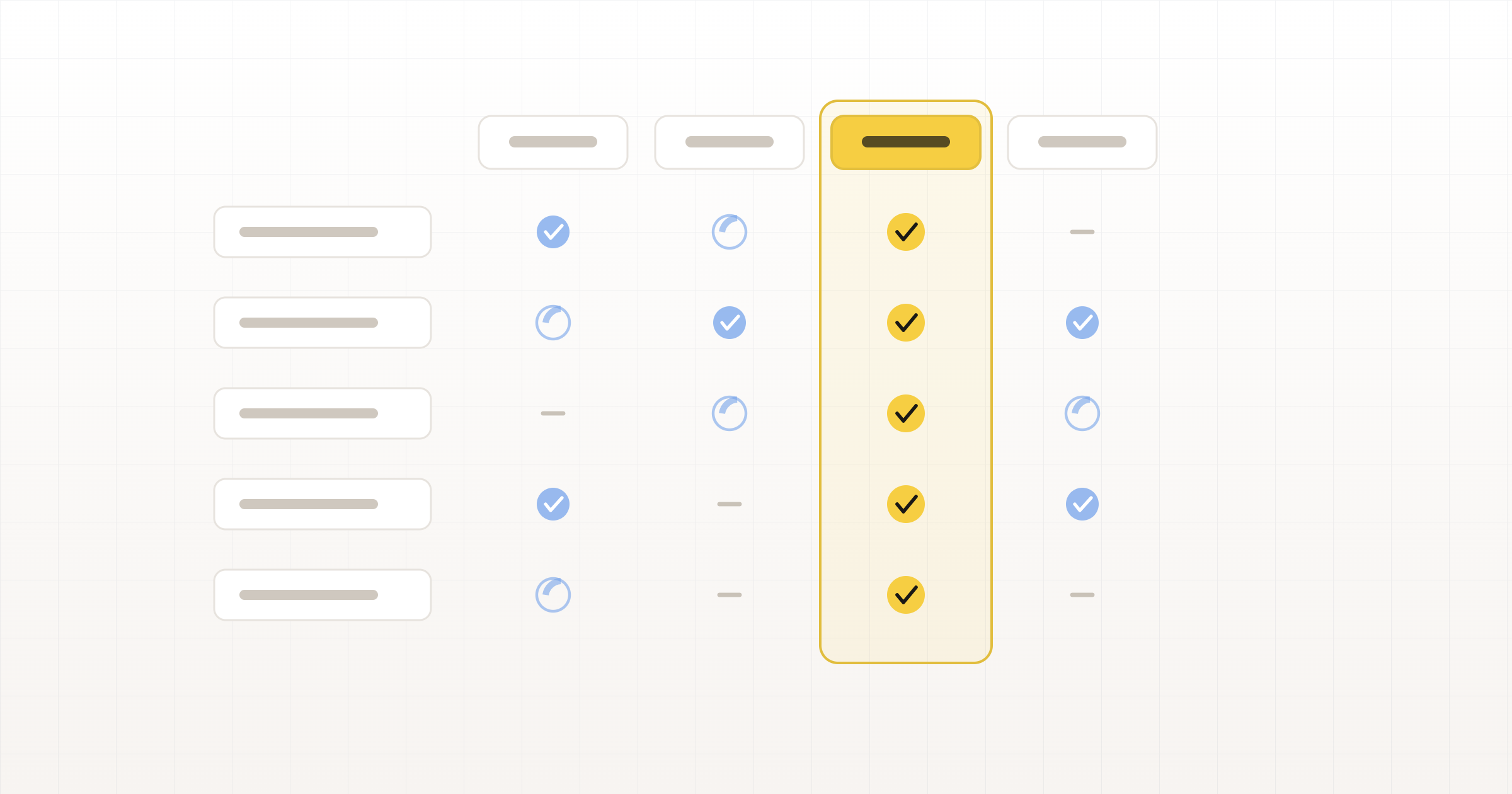
| What to test in the demo | What a good answer looks like |
|---|---|
| Built for brands selling into retail | A retailer account P&L with trade, deductions, and velocity, not a store P&L |
| Gross-to-net and trade spend | Trade rate, promo lift, scan-downs, and deductions modeled by retailer, not a plug |
| SKU-level planning | Forecast and cost at item level, with the P&L rolling up from SKU detail |
| Channel margin logic | DTC, Amazon, retail, and distributors modeled with their own fees and terms |
| Shipment vs. consumption | Both forecasts held in the model, with the offset between them visible |
| Inventory and POs tied to cash | Change a demand assumption and watch weeks on hand, POs, and cash move together |
| Retail and distributor data | Named connectors for retailer POS, SPINS, UNFI, KeHE, and 3PLs |
| Excel continuity | A working model in real Excel on day one, exportable with formulas intact |
| Pricing model | A published price, or at minimum license and implementation quoted separately |
| Total cost of ownership | License plus implementation plus connectors plus your team's model-build hours |
What Switching Actually Costs You
Start with Cube's strongest cards, because they are real. Setup is designed for the finance team to run without consultants, with a named onboarding lead. The spreadsheet experience is well liked. And the breadth of places Cube delivers numbers, from Slack and Teams to slides and BI tools, is wider than most of the category. Do not let any vendor, including us, wave that away.
The honest counter is that fast to connect is not the same as fast to a working CPG model. If the model you bring does not already handle trade, deductions, and sell-through, connecting it faster does not add them. Ask what the model looks like the week after kickoff, and who built it.
Then there is the calendar. Nobody should re-platform finance in Q4. If you are reading this in the fall, scope now, pick in October, and start in January when the close calendar has room. Any vendor pushing you to sign before Black Friday is optimizing for their quarter, not your peak.
What you can do in 30 minutes is separate the shortlist:
- Pick one real retailer decision you are facing: a Target reset, a Costco roadshow, a UNFI promotion.
- Bring your real trade rates, deduction history, SKU costs, and channel fees.
- Ask each vendor to model it live through the P&L, inventory, and cash, then export the model and send it to you before the call ends.
Add three diligence questions for every vendor: how many customers do you have at my revenue scale that sell through retailers and distributors (not stores), can I speak to two of them, and what is your security posture.
Ibex is the benchmark on the other side of a switch. A one-off model change used to take three to four hours and required in-house expertise. Now it takes about half an hour. "There were some points where, without Drivepoint, I would have had to spend almost half of my week just creating financial models," said Andrew Bridgers, Director of Supply Chain & Planning. The results: $314,000 in annual finance personnel savings, 190+ hours saved each year, and 77% revenue growth year over year since onboarding.
Which Alternative Fits Your Situation
You operate your own stores. Multi-location retail, restaurants, fitness. Cube's store P&L reporting and labor planning are built for you, and it may be exactly the right choice.
You are a SaaS, services, healthcare, or nonprofit organization. Cube covers your industry directly. This post is not really for you.
Your model already handles your CPG economics, and the problem is stale data. A spreadsheet-layer tool such as Cube, Datarails, or Aleph may be enough. Do not re-platform your planning to solve a sync problem.
You sell physical product through DTC, Amazon, retail, and distributors. Your model has to understand gross-to-net, trade, sell-through, SKUs, and inventory, because those are the levers that move EBITDA in CPG, and it still has to leave the building as a file a lender can open. This is where specialization pays. Drivepoint customers improve EBITDA margins by an average of 6.7 points in year one. Mad Rabbit added about 20% to EBITDA. Geologie lifted EBITDA margin 18%.
Whichever direction you go, the test is the same. Bring a real retailer decision, on real data, and see who can answer it in the room and send you the file. Book a demo and bring your hardest retailer PO.
Cube FP&A alternatives: frequently asked questions
What is Cube software used for?
Cube software is an FP&A platform from Cube Planning, Inc. that finance teams use for budgeting, forecasting, reporting, and variance analysis without leaving Excel or Google Sheets. It syncs governed data from ERP, CRM, HRIS, payments, and data warehouse systems into spreadsheets, a web workspace, Slack and Teams, slides, BI tools, and AI assistants through an MCP server. Its customers span software, services, healthcare, retail, and multi-location operators, and its retail content centers on store-level reporting such as store P&Ls and labor planning.
What does Cube software cost?
Cube software does not publish prices. Its pricing page lists three tiers, Bronze, Silver, and Gold, and each routes to a custom quote based on the size of your model, your team, and your source systems. Features such as Slack and Teams integration, workflow automation, and MCP integration are listed from the Silver tier up. Figures you see online are third-party estimates, not quotes. When comparing, look at total cost of ownership: license, implementation, connectors, and your team's hours building and maintaining the model. For reference, Drivepoint publishes pricing starting at $449 per month.
Is Cube a good fit for CPG and DTC brands?
Cube FP&A can be a good fit if your consumer brand operates its own stores, or if your model already handles your channel economics and your main problem is getting clean data into Excel. Cube counts Tecovas, Faherty, LMNT, and Our Place among its customers and holds a 4.5 out of 5 rating on G2 across 147 reviews (September 2026). Brands that sell into retailers and distributors should test it on gross-to-net: trade spend, deductions, scan-downs, and sell-through by retailer. In a horizontal platform those are logic you configure yourself, and retailer POS, SPINS, and distributor data typically arrive through a data warehouse or custom connector. Ask to see a Target or Whole Foods account P&L in the demo, not a store P&L.
Cube vs. Datarails vs. Drivepoint: what is the difference?
Cube software and Datarails are both spreadsheet-layer FP&A platforms: they keep your model in Excel, consolidate data from your ERP and other systems, and add reporting and AI on top. The choice between them usually comes down to UX, consolidation depth, and how Microsoft-centric your stack is. Drivepoint also keeps you in real Excel and also offers an MCP server for Claude, but it ships the model itself: a three-statement financial model built for consumer brands, with SKU-level planning, channel margin, trade spend and deductions, and inventory and purchase orders tied to cash, fed by retailer, SPINS, and distributor data. Drivepoint publishes pricing from $449 per month; Cube and Datarails quote. Capabilities change quickly, so verify current functionality with each vendor.
What is the best Cube alternative for a consumer brand?
The best Cube alternative depends on how your brand sells. If you operate stores or only need cleaner data in an existing model, another spreadsheet-layer tool such as Datarails, Vena, or Aleph may be enough. If you sell physical product through DTC, Amazon, retailers, and distributors, look for a platform that models gross-to-net, trade spend, deductions, shipments versus consumption, SKU-level demand, and inventory tied to cash out of the box. Drivepoint is built specifically for that, keeps the model in real Excel, and publishes its pricing. The fastest test: bring one real retailer decision, ask each vendor to model it live, and ask them to send you the file before the call ends.