
Most CPG brands do not start looking for an Aleph alternative because it failed them. They start looking because they bought a very good answer to a data-plumbing problem and then discovered they had a planning problem. Aleph keeps your model in Excel or Google Sheets and pipes live actuals into it from NetSuite, QuickBooks, Shopify, and 150-plus other sources. That is real, and it is fast. It is also a different job from owning a three-statement model that understands SKUs, retailer deductions, distributor margin, and what next quarter's purchase orders do to cash.
Ibex saved $314,000 a year in finance personnel costs after moving planning onto a platform built for its business. This guide covers what to compare, how to test a shortlist in 30 minutes, and which kind of alternative fits which situation.
What Aleph FP&A Is Built For, and When You've Outgrown It
Credit where it is due. Aleph is one of the best-liked tools in its category.
It is a serious product. Aleph is a spreadsheet-native FP&A and data platform: bi-directional Excel and Google Sheets add-ins, 150-plus no-code connectors across ERP, HRIS, CRM, payments, and data warehouses, a pivot-style explorer for slicing data on demand, custom functions that pull any dataset into a single cell, scheduled automations, an AI variance tool that drafts the "what changed and why," an agent that answers finance questions in Slack and Teams with cited sources, and a connector for Claude. There is a free, full-access trial, and customers routinely report going live in a week or two. Its logo wall skews SaaS and tech (Zapier, Notion, Turo, Chess.com, Harvey, Postscript), with a handful of consumer names such as Hungryroot, Parachute, and Eight Sleep.
Aleph's own reviewers describe the boundary precisely. Several G2 reviewers note that it is a data and reporting layer for the spreadsheets you already have rather than a full planning suite, and that you should not buy it expecting deep forecasting features. G2's compiled cons are consistent with that: missing features relative to established planning tools, slow performance on large datasets and Google Sheets refreshes, an Excel add-in that takes more setup than expected, dashboard limitations, and a learning curve that can involve SQL.
None of that is a knock. It is a description of what the product is. CPG brands that outgrow it tend to hit one of three walls:
- The sync is live, but the model logic is still yours to build. Aleph makes your existing model current. It does not ship you a consumer-brand model. SKU-level demand, channel margin, inventory, and PO logic live in whatever workbook you already had, with all the fragility that implies.
- Retail economics are not first-class objects. Trade spend, deductions, chargebacks, distributor margin through UNFI and KeHE, scan-backs, and slotting are where CPG margin actually goes. In a sync tool, a GL line without retailer tagging stays untagged, and gross-to-net stays a plug at the bottom of the P&L.
- The connector catalog is built around SaaS metrics. HRIS, ATS, CRM, Stripe, and Salesforce are richly covered. Retailer portals, EDI, scan and velocity data, and 3PL inventory feeds are not the center of gravity, and for a brand in 1,800 Target doors they need to be.
The market has a habit of reading all of this as an Excel problem. It is not, and here Aleph and Drivepoint agree. Gartner has forecast that by 2026, more than 70% of finance organizations will have moved away from spreadsheets as their primary planning tool, and the FP&A platform market is tracking toward roughly $10 billion by the end of the decade (The CFO, October 2025). The useful reading is not "Excel is bad." Excel is where finance people think. What breaks is using disconnected spreadsheets as the data layer underneath the thinking. Both platforms fix that. The comparison is about what sits on top of the data layer once it is fixed.
Laundry Sauce hit eight figures in two years with a fractional CFO's simple models sitting on top of scattered Shopify, Amazon, and QuickBooks data. The models could not predict customer behavior or its financial impact. CEO Ian Blair put the stakes plainly: "If your model isn't that accurate, and you're looking three months into the future, you're living in fantasy land." Today Laundry Sauce forecasts at 98% accuracy.
What CPG Brands Should Actually Compare
One warning before the criteria. If you search for Aleph alternatives, almost nothing that comes back is about this company. The results are dominated by Runway Aleph, an AI video editing model, along with Aleph Cloud, a decentralized computing network, and Aleph Alpha, a German AI lab. G2 does list the FP&A product correctly, but its top alternatives are Datarails, Vena, Planful, and Anaplan, all horizontal tools built for software and services companies. Aleph's own comparison pages name the same set, plus Cube and Pigment. Nobody has published a consumer-brand comparison, which is most of the reason this page exists.
Most FP&A roundups compare connector counts, dashboards, and user seats. Those articles are written for software companies. If you sell physical product, six things matter more, and they are the ones vendors are least likely to volunteer. (We go deeper on how to evaluate FP&A tools in a companion piece.)
1. Model included, or sync only. This is the question that sorts the whole category. Does the vendor ship a three-statement, driver-based model built for a consumer brand, or does it sync data into the model you bring? Both are legitimate purchases. They are not the same purchase, and the second one leaves the model build on your calendar.
2. SKU-level and channel-level planning. Can you forecast, price, and cost at the item level, and does the P&L roll up from there? Or does SKU detail live in a side file that someone reconciles by hand every close?
3. Inventory, POs, and cash moving together. When you change a demand assumption, purchase orders, weeks on hand, in-transit inventory, and the cash curve all have to move with it. If they live in a separate workbook, they will not.
4. Trade spend and deductions as modeled objects. If you sell through Target, Costco, Whole Foods, or a distributor, gross-to-net is the whole game. Ask whether scan-backs, MCBs, slotting, and chargebacks have their own logic, or whether they are an adjustment plugged in below net sales.
5. Excel continuity in both directions. Can you export the entire model with formulas intact and email it to a lender or a board member? Aleph passes this test by design, and so does Drivepoint, so the real question is what is in the file when it lands. A synced workbook with your old model in it and a purpose-built consumer-brand model are both "Excel."
6. Retail and wholesale data. Named retailer portal, EDI, distributor, and scan-data connectors, not just Shopify and NetSuite. A brand selling through UNFI needs its deductions data in the model, not in a PDF.
Use your own words in the demo. Ask whether it actualizes without a manual rebuild. Ask how you roll the model forward. Ask what version control looks like, or whether you are still going to end up on Final Final v7. Then ask them to show you a Target PO hitting inventory and cash.
Dose chose on exactly this basis. Founder Vasu Goyal on what separated the options: "Drivepoint is all about baking in historical actuals and using that as predictive data. It's the biggest difference between them and their competitors." The result was $120,000 saved annually, 240 hours back, and a 3 to 4 point lift in gross margin.
The Four Kinds of Aleph FP&A Alternatives
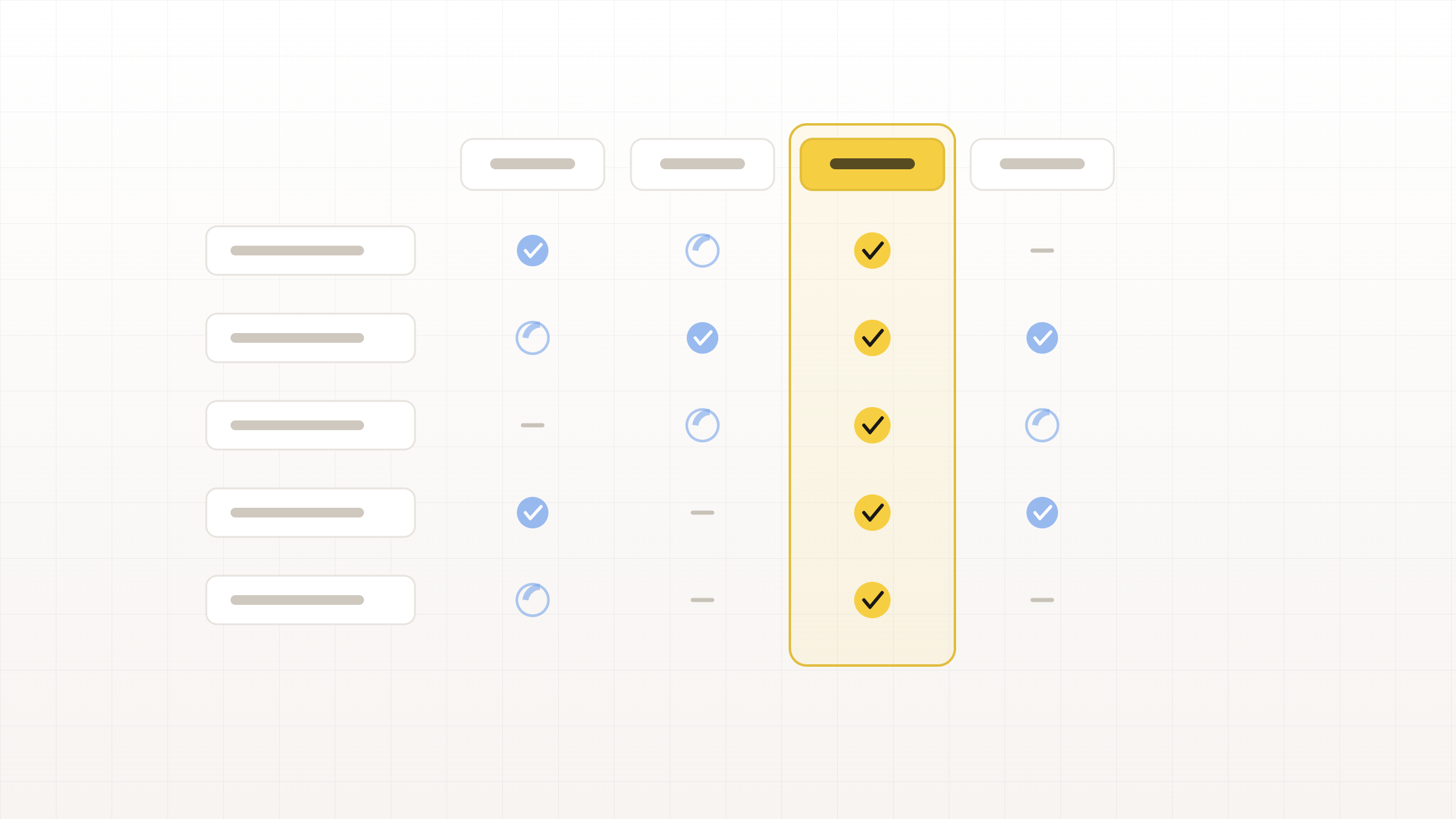
Sort the market by what you are actually buying, not by feature count. Four groups cover it.
- Spreadsheet-sync tools: Cube, Datarails, Vena. Aleph's closest architectural peers. All keep your model in a spreadsheet and pipe data into it. The choice among them comes down to UX, governance, and how Microsoft-centric your stack is. Right answer if the sync really is the whole problem.
- Horizontal mid-market FP&A suites: Planful, Prophix, Abacum, Drivetrain, Mosaic, Jirav. Structured, web-based budgeting and modeling across every industry. More model than a sync tool, more implementation too, and consumer-brand logic arrives through configuration.
- Enterprise EPM: Anaplan, Workday Adaptive Planning, OneStream, Pigment. Multi-entity, multi-department planning at scale, with six-figure budgets and quarters-long implementations. Right answer if planning extends well past finance.
- Consumer-brand modeling platforms: Drivepoint. This is where we sit, and it is a short list. The bet is specialization: a three-statement model built for CPG with SKU-level planning, channel margin, trade spend and deductions, and inventory and POs built in rather than configured in. The model stays in real Excel, actualizes as data lands, and rolls forward each year. 100+ integrations include the retailer, distributor, and 3PL data that horizontal tools treat as an afterthought.
Two things have stopped being differentiators, and you should know that going in. Both Aleph and Drivepoint keep the model in a spreadsheet, so "Excel-native" is table stakes in this comparison. And both ship a connector for Claude: Drivepoint's MCP server lets you ask your numbers anything in Claude on a clean, vetted data layer, and Aleph offers an MCP of its own alongside its Slack and Teams agent. If a vendor pitches either as the reason to buy, ask what sits underneath it. Claude is the engine. The model and the data layer are the car.
On cost, Aleph is quote-based with a free trial and no published rate card. Aleph's own pricing guide, updated September 2026, places the agile mid-market FP&A tier at roughly $20,000 to $75,000 a year before implementation and notes that nearly every vendor in the tier, itself included, quotes rather than publishes. Drivepoint does publish our pricing, starting at $449 per month. Either way, compare total cost of ownership rather than license fees: implementation, connector or data costs, and the finance team hours consumed during setup and ongoing maintenance. With a sync tool, add one more line: the hours your team spends building and maintaining the model the tool syncs into.
An evaluation scorecard you can actually use
Rather than trust anyone's ranking, including ours, take this to every vendor on your shortlist and fill it in from the demo. Capabilities in this category change quarterly, so score what you see, not what you read.
| What to test in the demo | What a good answer looks like |
|---|---|
| Model included vs. sync only | A three-statement consumer-brand model ships with the platform, not "we sync into yours" |
| Excel continuity, both directions | Model opens in real Excel, formulas intact, and you can email the file to a lender |
| Three-statement depth | P&L, balance sheet, and cash flow built and edited live in the room |
| SKU-level planning | Forecast and cost at item level, P&L rolls up from SKU detail, no side file |
| Channel margin logic | DTC, Amazon, retail, and distributor modeled separately with their own fees and terms |
| Inventory and POs | Change a demand assumption, watch weeks on hand, POs, and cash all move together |
| Trade spend and deductions | Scan-backs, MCBs, slotting, chargebacks as modeled objects, not a bottom-line plug |
| Retail and wholesale data | Named retailer portal, EDI, distributor, or scan-data connectors, not just Shopify and NetSuite |
| Pricing model | A published price, or at minimum license and implementation quoted separately |
| Total cost of ownership | License plus implementation plus connectors plus your team's hours, including model-build hours |
What Switching Actually Costs You
Start with Aleph's strongest card, because it is a real one: speed. Their customers report going live in days, sometimes doing quarter-end reporting on the platform within three weeks of signing, and G2 rates them Most Implementable in the category. Do not let any vendor, including us, wave that away.
The honest counter is that fast to sync is not the same as fast to a working consumer-brand model. With a sync tool, the model build stays on your calendar, and if your current model does not already handle SKUs, channel margin, and trade spend, syncing it faster does not add them. Ask what the model looks like the week after kickoff, and who built it.
The other objection we hear is not about features at all. It is about the calendar. "We're not making major platform changes on November one." "We've made that mistake before, and that's a painful one you don't forget." Nobody should re-platform finance in Q4. If you are reading this in September, the right move is to scope now, pick in October, and start in January when the close calendar has room. Any vendor pushing you to sign before Black Friday is optimizing for their quarter, not your peak.
What you can do in 30 minutes is separate the shortlist. This exercise works better than any feature matrix:
- Pick a real decision you are facing: a specific retailer PO, a specific price change, a specific SKU launch.
- Bring your real SKU costs, channel fees, and trade rates to the demo.
- Ask the vendor to model it live and show you the P&L, inventory, and cash impact, then ask them to export the model and send it to you.
With a sync tool, the honest answer to step three will be some version of "we sync into whatever model you bring." That is not a dodge. It is a clear statement that the build is on you, and you deserve to hear it before you sign rather than in month four.
While you are at it, ask every vendor the same diligence questions: how many customers do you have at my revenue scale and in my channel mix, can I speak to two of them, and what is your security and compliance posture. Any serious vendor will have answers ready.
Ibex is the useful benchmark on the other side of a switch. A one-off model change used to take the team three to four hours and required someone in-house with the expertise to do it. Now it lands in about half an hour. "There were some points where, without Drivepoint, I would have had to spend almost half of my week just creating financial models," said Andrew Bridgers, Director of Supply Chain & Planning. The results: $314,000 in annual finance personnel savings, 190+ hours saved annually, and 77% revenue growth year over year since onboarding.
Which Alternative Fits Your Situation
You have a good model and a data-pulling problem. Your workbook already handles your business. It is just stale by the time you share it. Aleph, Cube, or Datarails may be exactly the right tool. Do not re-platform your planning to solve a sync problem.
You are a SaaS or services company. Aleph's customer base is your peer group, and its connector catalog was built for your stack. This post is not really for you.
You need enterprise-scale planning across departments and entities. Headcount, multi-entity, multi-currency, a dedicated planning team. Look at Anaplan, Adaptive, OneStream, and Pigment, and budget realistically for implementation.
You sell physical product across DTC, Amazon, retail, and distributors. Your planning has to understand SKUs, channel margin, trade spend, deductions, and inventory, because those are the decisions that move EBITDA in CPG, and the model has to leave the building as a file someone else can open. This is where specialization pays. Drivepoint customers improve EBITDA margins by an average of 6.7 points in year one. Mad Rabbit added 20% to EBITDA. Oats Overnight timed a facility expansion worth a $4 million EBITDA increase.
Whichever direction you go, the test is the same. Bring a real decision, on real data, and see who can answer it in the room and then send you the file. Book a demo and bring your hardest question.
Aleph FP&A alternatives: frequently asked questions
Who competes with Aleph FP&A?
Aleph, the FP&A platform at getaleph.com, competes in four groups depending on what you are buying: spreadsheet-sync tools that pipe live data into your existing Excel or Google Sheets model (Cube, Datarails, Vena), horizontal mid-market FP&A suites (Planful, Prophix, Abacum, Drivetrain, Mosaic, Jirav), enterprise EPM platforms (Anaplan, Workday Adaptive Planning, OneStream, Pigment), and consumer-brand modeling platforms like Drivepoint. G2 lists Datarails, Vena, Planful, and Anaplan as its top Aleph alternatives, all of them horizontal tools built for software and services companies. One caution: most search results for "Aleph alternatives" are about Runway Aleph, an AI video model, or Aleph Alpha, a German AI lab, not the finance product.
Is Aleph a good fit for a CPG or DTC brand?
It depends on the job you are hiring it for. Aleph is a spreadsheet-native data and reporting layer: it connects 150-plus sources and keeps the model you already have current in Excel or Google Sheets, with AI variance notes and an agent that answers questions in Slack. If your model already handles SKUs, channel margin, trade spend, and inventory and your only problem is stale data, it can be a strong fit, and its customers rate it 4.9 on G2. If you need the model itself, with retailer deductions, distributor margin, SKU-level demand, and purchase orders tied to cash built in, evaluate a consumer-brand platform alongside it. Aleph's customer base skews SaaS and tech, with a handful of consumer names.
How much does Aleph cost?
Aleph does not publish pricing. The finance platform is quote-based, with a free full-access trial before any pricing conversation, and the quote moves on seat count and module mix. Aleph's own September 2026 pricing guide places the agile mid-market FP&A tier at roughly $20,000 to $75,000 a year in subscription before implementation, and notes that nearly every vendor in that tier quotes rather than publishes. Any specific Aleph figure you find online is a third-party estimate, not a quoted price. When you collect quotes, compare total cost of ownership: license, implementation, connectors, and your team's hours, including the hours spent building and maintaining the model the tool syncs into. For reference, Drivepoint publishes pricing starting at $449 per month.
What is the difference between Aleph and Drivepoint?
Both keep the model in a spreadsheet, both connect live data from ERPs and sales channels, and both offer a connector for Claude, so the usual Excel-versus-platform comparison does not apply. The difference is what you are buying. Aleph syncs live data into the model you already built and layers AI reporting on top; it is horizontal, and its connector catalog and customer base center on SaaS and services companies. Drivepoint ships the model: a three-statement, driver-based financial model built for consumer brands, with SKU-level planning, channel margin, trade spend and deductions, and inventory and purchase orders connected to cash, kept in real Excel and fed by 75+ integrations including retailer, distributor, and 3PL data. Drivepoint publishes pricing from $449 per month; Aleph is quote-based with a free trial. Capabilities on both sides change quickly, so verify current functionality directly with each vendor against your own requirements.
What is the best Aleph alternative for a consumer brand?
For CPG and DTC brands, the deciding factors are usually whether the vendor ships a consumer-brand model or only syncs into yours, SKU-level planning, channel margin logic across DTC, Amazon, retail, and distributors, trade spend and deductions as modeled objects, and inventory and purchase orders that move with the forecast. Spreadsheet-sync tools and horizontal FP&A suites handle these through your own model build or through configuration. Drivepoint is built specifically for consumer brands, keeps the model in real Excel, and connects 75+ data sources into one live model. The fastest way to compare any shortlist is to bring a real decision, such as a specific retailer PO, ask each vendor to model it live in the room, and then ask them to export the model and email it to you before the call ends.